
Semi-Final Draw completed: Here's what the semi-finals of the Eurovision Song Contest 2026 look like

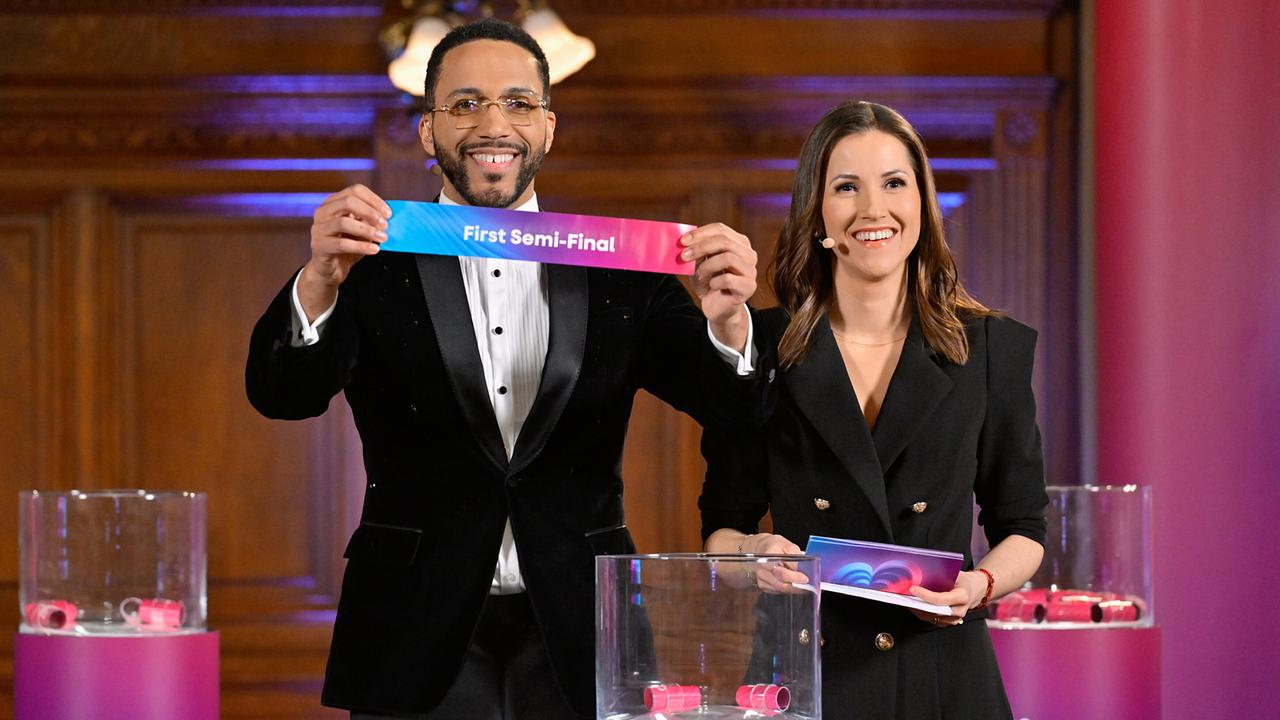
The semi-final draw for the Eurovision Song Contest 2026 has been completed at Vienna City Hall. The 30 participating countries will compete in two semi-final shows (15 nations each) on May 12 and 14 for a place in the grand final of the Song Contest on May 16 at the Wiener Stadthalle. Ahead of the draw, Basel's President Conradin Cramer presented a special gift to Vienna's Mayor Michael Ludwig. The entire show, which was broadcast live on ORF 1 and ORF ON and hosted by Alexandra Maritza Wachter and Cesár Sampson, can still be viewed on demand on ORF ON.
ORF Director General Roland Weißmann: „Today's semi-final draw at Vienna City Hall gave us two reasons to celebrate! On the one hand, we now know who will be competing in which semi-final. Millions of people will be cheering on their countries, and thousands will be turning the semi-final shows at the Wiener Stadthalle into very special live experiences. On the other hand, the handover of the host gift between Basel and Vienna marked another important milestone, which really kicks off our Song Contest year. And I am convinced it will be a great one.“
Two spectacular semifinal shows pave the way to the grand finale
ORF Program Director Stefanie Groiss-Horowitz: "The semi-final draw marks the start of a Song Contest year in which we want to show what ORF stands for in all areas of our programming: diversity, innovation, and great live entertainment. The shows in May are not just musical competitions, but tell stories from all over Europe – emotional, surprising, and thrilling. Our audience can look forward to top-class productions that make the special atmosphere of the host country Austria uniquely tangible."
Ten nations can qualify for the grand finale on May 16th in the Wiener Stadthalle from each of the two semi-final shows on May 12th and 14th. Who will compete in which semi-final and in which half was decided in the semi-final draw (still available on ORF ON) at Vienna City Hall. The participating countries were first divided into five pots and then assigned to one of the two semi-finals by presenter Alexandra Maritza Wachter and presenter Cesár Sampson. This system was established by Once, the EBU's voting partner, and guarantees a fair and balanced voting system for the events.
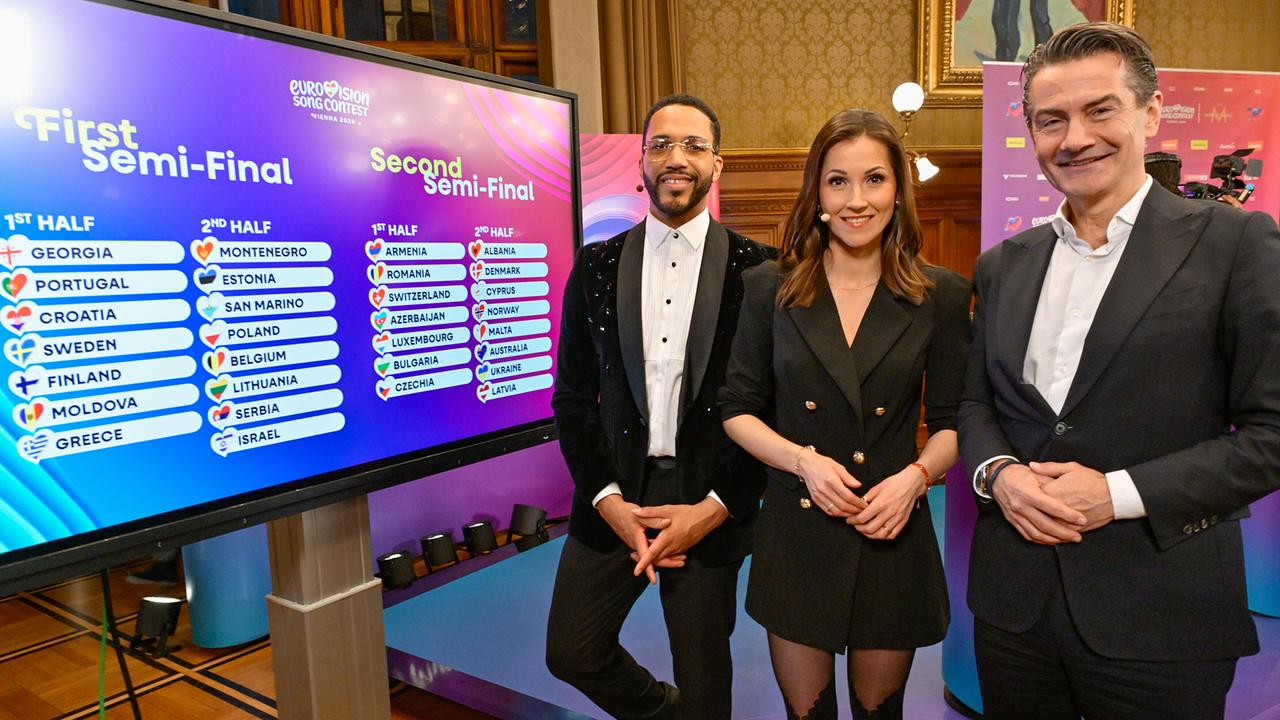
The following countries are represented in the first semi-final:
- First half: Georgia (GPB) Portugal (RTP) Croatia (HRT) Sweden (SVT) Finland (YLE) Moldova (TRM) Greece (ERT)
- Second half: Montenegro (RTCH) Estonia (ERR) San Marino (RTV) Poland (TVP) Belgium (RTBF) Lithuania (LRT) Serbia (RTS) Israel (KAN)
The following countries will compete in the second semi-final:
- First half: Armenia (AMPTV) Romania (TVR) Switzerland (SRG SSR) Azerbaijan (Ictimai) Luxembourg (RTL) Bulgaria (BNT) Czechia (CT)
- Second half: Albania (RTSH) Denmark (DR) Cyprus (CyBC) Norway (NRK) Malta (PBS) Australia (SBS) Ukraine (Suspilne) Latvia (LSM)
As the host country, Austria (ORF) has qualified for the grand final alongside the United Kingdom (BBC), France (FTV), Italy (RAI), and Germany (ARD/SWR), and will perform in the second semi-final together with France and the United Kingdom. Italy and Germany will present their entries in the first semi-final.
Michael Ludwig, Mayor of Vienna: „It's starting! With today's draw for the semi-finals, we are taking big steps towards the Eurovision Song Contest 2026 in Vienna. In addition to a great show at the Wiener Stadthalle, there will be numerous free events in Vienna to make this event accessible to all Viennese residents and visitors. Vienna will once again prove that it is a great host for people from all over the world, where everyone feels comfortable and safe.“
Michael Krön, ESC Executive Producer: "Today's visit by the delegation from Basel was a particularly special moment for our team, as it traditionally symbolizes the official handover from the previous host city to the current one. At the same time, I am very pleased that we are well on schedule with our planning and that all the trades are working seamlessly together – exactly as is necessary for a production of this magnitude."
Basel carnival guild set the mood in advance
In the run-up to the semi-final draw, a ceremonial presentation of a host gift from the city of Basel to the city of Vienna took place at Vienna City Hall. The President of the Canton of Basel-Stadt, Conradin Cramer, together with a Basel carnival guild, presented a traditional carnival lantern to the Mayor of Vienna, Michael Ludwig.
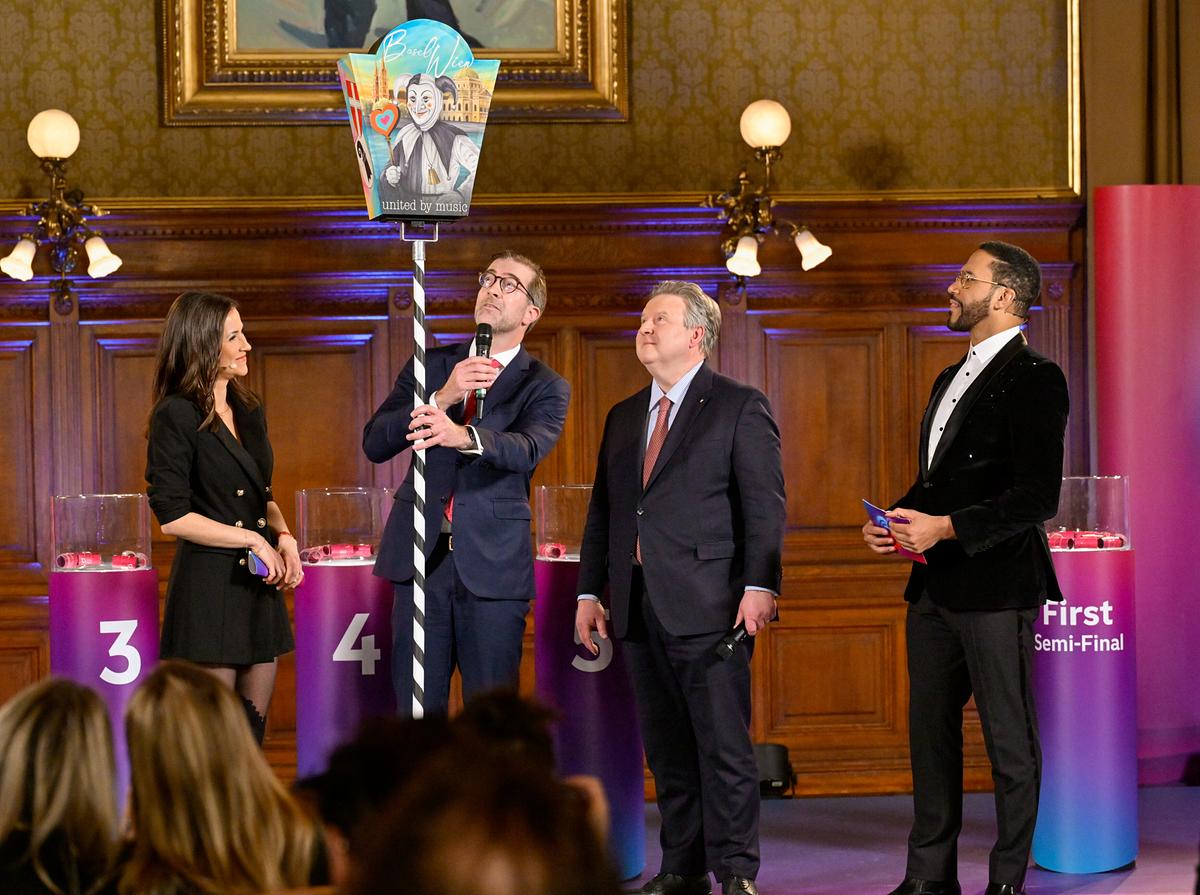
The Basel carnival is part of UNESCO cultural heritage and has several similarities with the Eurovision Song Contest. Both are large, communal events that celebrate tolerance, creativity, and passion. Representing the event that has been held annually in Basel for centuries, a Basel carnival guild visited Vienna, creating a great atmosphere and spreading anticipation for the Eurovision Song Contest 2026 with a parade through the city. One of the protagonists of the carnival formation finally presented the carnival lantern, created by a Basel artist, together with Conradin Cramer. The lantern features, among other things, last year's ESC winner JJ and a typical Basel carnival figure in front of well-known landmarks in Basel and Vienna.
For inquiries:
Johannes Mayer
Deputy Head of Communications
johannes.mayer@orf.at
(January 12, 2026)