

ORF presents updates on the 70th Eurovision Song Contest in Vienna

175 days before the First Semi Final of the Eurovision Song Contest 2026, ORF has provided updates on the world's largest live music event during a press event at the Wiener Stadthalle – including initial designs of the „Postcards“, information on volunteers and ticketing, as well as the Austrian national final „Vienna Calling.“
"The 70th edition of the Eurovision Song Contest is something very special. We are working at full speed to inspire all of Europe, offer unique shows, and create a festival for everyone. We’re focused on unity and want to create special moments," says Roland Weißmann, General Director of ORF.
Postcards: Between tradition and innovation
The so-called „Postcards“ have been a longstanding tradition at the Eurovision Song Contest. Originally designed to cover the time needed to change the set between the competing songs, they have become much more than that today: they are now important artistic elements of the shows, showcasing the host country and the artists taking part.
Gebhardt Productions will be responsible for creating the Postcards for the Eurovision Song Contest 2026. Their concept merges real outdoor shots at Austrian locations with studio recordings of the artists, which are then layered over each other in unique ways. This will create very special worlds of experience: from a chairlift flying over snowy mountains, to a miniature artist wandering through forests and meadows looking at oversized plants or walking over spectacular skylines. Additionally, a real postcard will be printed to accompany each film for fans to send. There is also a historical Austrian connection, as the first postcard was invented in 1868 by Carinthian Emanuel Herrmann.
"We are showing Austria in a modern visual language from its most beautiful and exciting sides. Our concept offers endless possibilities to involve the artists. Furthermore, the postcards can actually be sent all over the world or be collected – they are a souvenir that will remind people of the Eurovision Song Contest 2026 in Austria for a long time," says Stefanie Groiss-Horowitz, Programme Director of ORF.
Production for the postcards began in October to capture Austria in as many seasons as possible. The recordings of the performers will be shot later in the studio. The team is ensuring that the video concepts match the personalities of the artists. They can influence the design of the postcards by selecting suitable props and determining the way they are presented.
ORF seeks 800 volunteers
The registration process for up to 800 volunteers who will assist the thousands of people visiting Vienna next May will begin on 1 December. Interested parties can already pre-register for information directly on songcontest.ORF.at. Those selected will take on a INTERN variety of roles from 27 April to 17 May, at various locations including the Media Centre and Information desks at the Wiener Stadthalle, at the Eurovision Village in Rathausplatz, and the airport.
„Volunteers bring enthusiasm and are essential for the world's largest live music event every year. The Eurovision Song Contest offers the unique opportunity to become part of an international family, meet like-minded people from all over the world, and be part of something big together,“ says Michael Krön, Executive Producer of the Eurovision Song Contest.
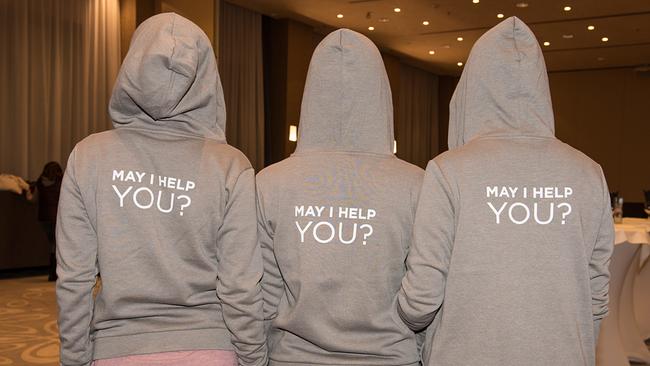
1.600 Applicants for Stand-In Auditions
1,600 applicants from around the world have already applied for “stand-in” positions. These are professional performers who substitute for artists, or hosts, to test camera shots, check positions, and refine show elements before the artists arrive in the Host City. From this broad pool, 680 professional dancers and 120 professional singers will be invited to auditions. Ultimately, 30 artists will be selected to participate as stand-in performers at the 70th Eurovision Song Contest.
Multi-stage Ticketing System
Due to the enormous interest from fans around the world in attending the Eurovision Song Contest in person , a regulated, fair, and secure ticket sale is crucial. At the Eurovision Song Contest in Vienna, a proven multi-stage ticketing system contracted by the EBU will be used, with a registration, activation, and ticket sales phase. Detailed information will be available on Monday 24 November on the website and social media accounts of the Eurovision Song Contest and ORF.
- Information about ticket sales (November 24, 2025)
Double Environmental Certification
For the world's largest live music event, ORF is aiming for a dual environmental certification: „Green Event“ and „Green Producing in Film and Television.“ The focus is on energy, mobility, waste and sustainable sourcing – from efficient travel and logistics planning to energy-saving lighting concepts and the use of multi-purpose cups at the events.
TV music festival for everyone
The Eurovision Song Contest 2026 will be a music festival for everyone, and thus ORF wants to set a strong example for people with disabilities. All songs will be produced with music sign language. The shows will feature subtitles, audio descriptions, and translations into Austrian Sign Language. Accessibility will also be a focus at the events, with a wide range of services available at the venues.
Vienna Calling – Who's Singing for Austria?"
Who will represent Austria at the 70th Eurovision Song Contest? For the first time since 2016, there will be a national final where the TV audience can help choose who will compete for Austria. Alice Tumler and Cesár Samson will host the grand prime-time show "Vienna Calling – Who's Singing for Austria?" live on ORF 1 and ORF ON on Friday 20 February 2026, at 8:15 PM, where the jury and audience will decide who will represent our country at the Song Contest.
There were more than 500 applications from all federal states, ranging from Schlager to Pop and Rock to Country or Opera, in various languages, from solo artists and bands across all genres and as colourful as the Song Contest itself. The ORF editorial team, together with scouts, is now selecting the twelve acts that will participate in the national preliminary round through an internal live casting.
The Postcards – a Fusion of the Analog and Digital World
The postcards have been a longstanding tradition at the Eurovision Song Contest. Originally designed to cover the time needed to change the set between the competing songs, they have become much more than that today: they are now important artistic elements of the shows, showcasing the host country and the artists taking part. Gebhardt Productions has been commissioned to produce the postcards for the Eurovision Song Contest 2026 in Vienna.
Each postcard begins with a scene of the artists viewing a postcard from Austria against the backdrop of their home country. The camera then „enters“ the postcard, and suddenly the musicians find themselves in the middle of the Austrian scenery – fully immersed in the postcard world.
This creates a unique experiential world: from a chairlift flying over snowy mountains, to a miniature artist wandering through forests and meadows looking at oversized plants or walking over spectacular skylines. At the end of each postcard, the participants pose for a selfie in front of the Austrian backdrop. The shot then freezes, the camera pulls back, and the postcard is pinned to a wall, stuck on a door, or attached to a refrigerator.
The designs will also be produced as real, physical postcards that fans can collect and send all over the world. This transforms the postcard into a cross-country message—a souvenir that honours the Eurovision Song Contest 2026 in Austria. The postcard also has a historical reference, as the first „correspondence card“ was sent from Austria-Hungary in 1869 by the Carinthian Emanuel Herrmann.
Sketch Drafts:



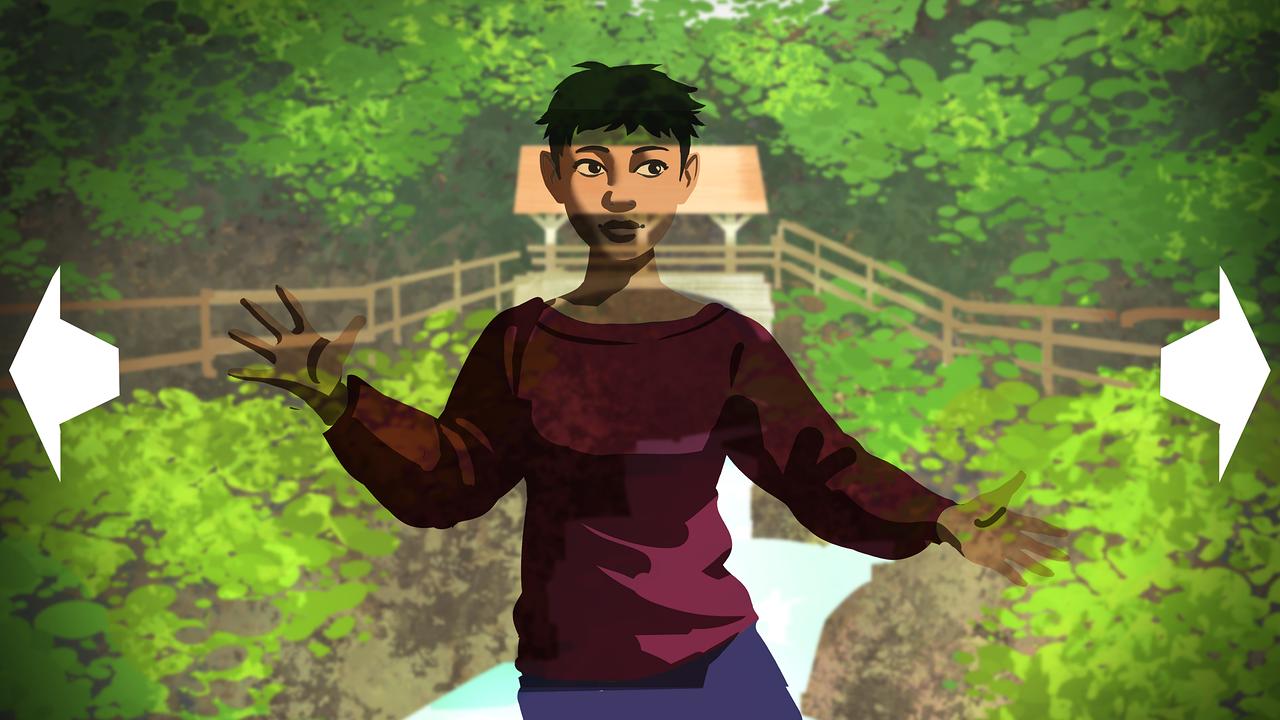
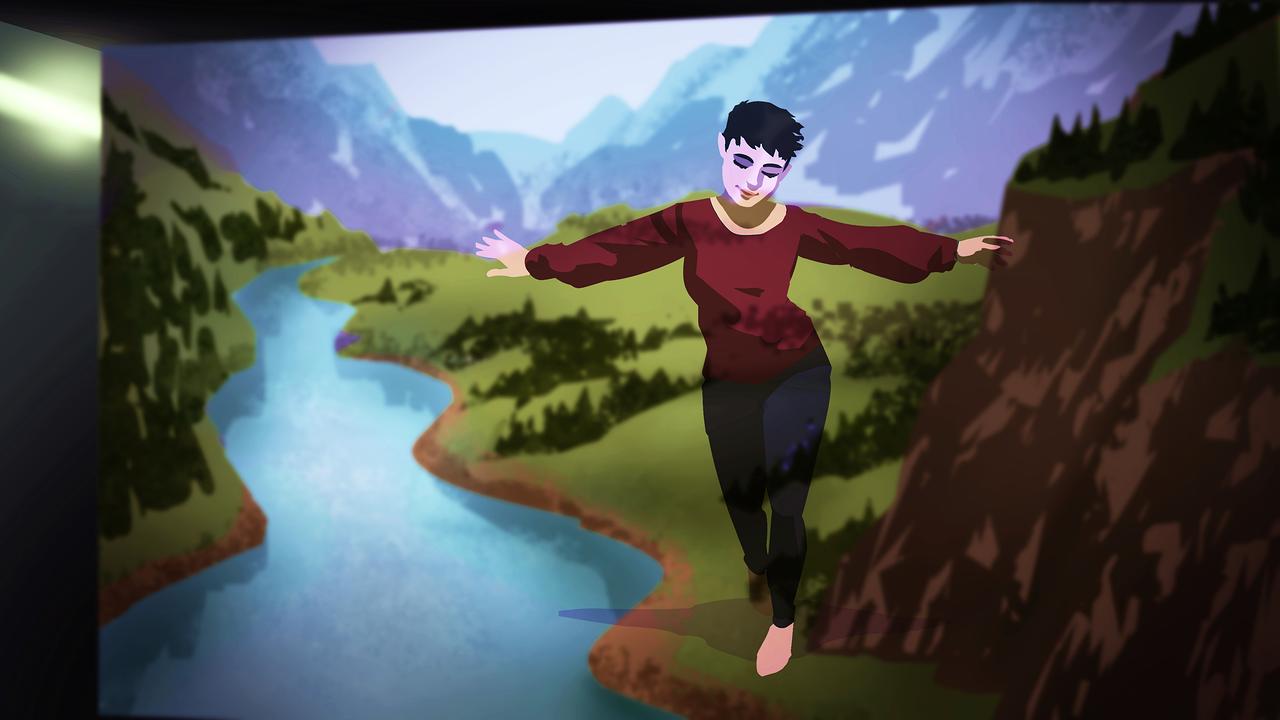


"In our postcards, we showcase Austria from its most beautiful and exciting sides - in a modern visual language and with a concept that offers diverse opportunities to involve the artists. As a special detail, our ‚postcards’ can also be sent as real postcards all over the world," says Stefanie Groiss-Horowitz, Program Director of ORF.
Filming for the postcards already began in October to capture Austria in as many seasons as possible. „It is important to us to find the right motif for each artist. Through the selection of props and their performance, the interpreters can help shape the postcards,“ says Verena Soltiz from Gebhardt Productions.
With this concept, ORF is setting new standards in creative designs and continuing the history of the historic „correspondence card“ on the world's largest music show stage.
Volunteers and Stand-ins
Behind a successful Eurovision Song Contest are thousands of people – among the most important are the volunteers. They bring enthusiasm and are essential for the world's largest live music event every year.
ORF is looking for up to 800 volunteers
The selection process will begin shortly for all those interested in supporting the Eurovision Song Contest in Vienna with their voluntary commitment. Highly motivated and adult volunteers of all age groups with diverse interests are sought. Those with good German and English skills are welcome to apply to volunteer in various roles at the event between 27 April to 17 May, 2026.
Those selected will take on a variety of roles from 27 April to 17 May, at various locations including the Media Centre and Information desks at the Wiener Stadthalle, at the Eurovision Village in Rathausplatz, and the airport.

The registration process for volunteers starts on 1 December on the website songcontest.ORF.at – interested parties can already pre-register directly on the website to receive information about the official registration start. ORF is looking for around 800 volunteers who want to be part of the Eurovision Song Contest.
In addition to official ESC clothing and catering, the voluntary supporters are covered by accident insurance. Furthermore, the Eurovision Song Contest offers the unique opportunity to meet like-minded people from many different countries and make new international contacts.
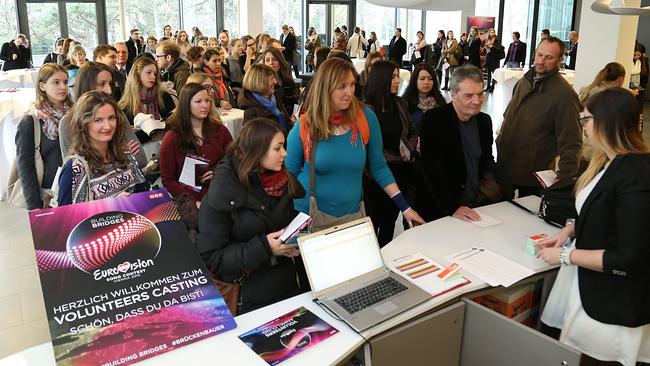
1,600 applicants from around the world for stand-in auditions
An important role in the nine major shows of the Eurovision Song Contest in Vienna is played by the so-called stand-ins. Stand-ins are individuals used in large events, such as TV productions, concerts, or award ceremonies, to represent the actual artists or hosts in order to rehearse procedures and show elements. Stand-ins take positions on stage, go through camera settings, and test lighting and sound before the actual stars perform. In live productions, this is also necessary to avoid technical errors and unclear procedures.
With the help of stand-ins, it is ensured that the process runs smoothly on event days and the show is perfectly staged for the audience.
From 18 to 20 December, three auditions will take place at the Motions Studios in Vienna to cast the stand-in performers for the Eurovision Song Contest at the Wiener Stadthalle. The interest has already been very high, with 1,600 applicants from around the globe. From this very broad pool, 680 professional dancers and 120 professional singers will eventually attend the auditions. Ultimately, 30 performers will be selected to be an important part of the shows as stand-in performers at the 70th Eurovision Song Contest.
First Information on Ticket Sales
Nine sold-out shows with 100,000 visitors: this was the success story ORF could report after the Eurovision Song Contest 2015. Next year, for the 70th anniversary of the world's largest live music event, thousands of fans are once again expected in host city Vienna, turning the Wiener Stadthalle into a hotspot for music enthusiasts with nine spectacular shows.
Experience shows that interest in tickets for the shows is enormous. It is therefore essential to ensure a regulated, fair, and secure ticket sales process. For this reason, a proven multi-stage ticketing system will be used, similar to those employed at other major events. Ticket sales will begin with a registration phase, during which fans must sign up to be approved for later ticket purchases. The goal of registration is to ensure fair ticket access and prevent bot purchases or commercial resale.
Only those who follow the official process can be certain of purchasing valid tickets and avoiding fake websites.
Detailed information on ticket sales and registration will be published on November 24, 2025, on the websites and social media accounts of the Eurovision Song Contest and ORF.
- Information about ticket sales (November 24, 2025)
Sustainability and Accessibility at the ESC
The Eurovision Song Contest is the world’s largest live music event which brings with it a lot of responsibility. ORF aims to demonstrate with their hosting that world-class entertainment and climate protection go hand in hand, and strives to organize the Eurovision Song Contest according to the criteria of two Austrian Ecolabels: „Green Event“ and „Green Producing in Film and Television.“
ORF Strives for Dual Ecolabel Certification
Back in 2015, the Eurovision Song Contest in Vienna set standards and became the first competition of this magnitude in Europe to receive the Austrian Ecolabel „Green Event.“ This pioneering work and the lessons learned led to the development of the internationally recognized standard „Green Producing in Film and Television.“
ORF is well aware that a major event of this dimension inevitably has environmental impacts. However, the goal is to keep the CO₂ footprint as low as possible. Therefore, the focus lies on four areas: energy, mobility, waste, and sustainable procurement. For the show's lighting concept, ORF follows the strict requirements of the „Green Producing“ certificate. The Wiener Stadthalle's electricity comes largely from its own photovoltaic system, and there are no constantly running generators as backup. Material deliveries are efficiently planned. Only environmentally certified catering companies using seasonal, organic, and fairly produced food will be employed. User-friendly waste separation systems will also be in place.
Independent auditors of the Austrian Ecolabel, commissioned by the Federal Ministry of Agriculture, Regions and Tourism, verify compliance with all criteria. The Wiener Stadthalle is also EMAS-certified. All accumulated knowledge will be documented and handed over to the winning country as a guideline.
As the world’s largest live music event, the Eurovision Song Contest has a special signaling effect: It demonstrates that entertainment, international cooperation, and sustainability are compatible, and that as a public broadcaster, it is about taking responsibility in all dimensions of sustainability – from environmental protection to social aspects.
Accessibility and Inclusion are Central Concerns at the ESC
The Eurovision Song Contest is an event for everyone. Accordingly, inclusion and accessibility in all areas of Contest-related events are of great importance to ORF which aims to set a strong signal for people with disabilities – in programming, at the Wiener Stadthalle, and at public viewings.
A milestone in designing an accessible Song Contest was already achieved in Vienna 2015. At that time, participating acts were broadcast with music signing in International Sign Language for the first time. What was a premiere back then has since become standard. In 2026, ORF will again produce all songs with music signing and offer them to all participating broadcasters for transmission.
Furthermore, ORF will naturally broadcast all live shows on ORF ON in an accessible format – with subtitles and translation into Austrian Sign Language for people with hearing problems, and with audio description for people with visual disabilities.
Vienna Calling – Who Will Sing for Austria?": More on the National Selection at ORF
Udo Jürgens, Conchita Wurst, and JJ – they all wrote Song Contest history for Austria. Who will follow in their footsteps and represent Austria at the 70th Eurovision Song Contest on Saturday, 16 May, 2026, in Vienna? For the first time since 2016, there will again be a national selection where the TV audience can help decide who will compete for Austria. In the major prime-time show "Vienna Calling – Who Will Sing for Austria?", a jury and the public will decide who will represent our country at the Song Contest.
One thing is already certain: Two stars will be waiting there who can safely be called Eurovision Song Contest professionals: Alice Tumler, who was part of the hosting quartet at ESC 2015 in Vienna, and Cesár Sampson, who secured third place for Austria at the 2018 Song Contest and serves as one of the scouts in the current selection process. As the hosting duo, they will guide viewers through the live show on Friday 20 February at 8:15 PM on ORF 1 and ORF ON.

For about two and a half months, artists, singers, and bands had time to apply. Interest was high and the creativity of Austria's musicians enormous – right up to the very last minute: The final submission landed in the „Vienna Calling“ inbox at 11:59 PM. More than 500 applications from all federal states, ranging from Schlager to pop and rock to country or opera, in various languages, from solo artists and bands, across all genres and as colorful as the Song Contest itself, reached the editorial team. This means more than 1,500 minutes of music were submitted.
In numerous listening sessions, the ORF editorial team reviewed and evaluated all submitted songs. Around 200 hours of editorial work went into the song selection. Together with the scouts (Cesár Sampson, Peter Schreiber, and Eberhard Forcher), a shortlist of the 30 best songs was created. After the list is finalized, these songs will receive the much-anticipated news – an invitation to the internal live castings at the end of November at ORF. There, the first test awaits as the musicians must perform live. The search is on for twelve acts who convince with outstanding stage presence and impressive voices and will face the jury and public in the national selection.
(November 18, 2025)
Press kit as PDF:
ORF presents updates on the 70th Eurovision Song Contest in Vienna