
ESC 2026: First-ever joint carbon footprint assessment and sustainability report by the host broadcaster and the host city

The 2026 Eurovision Song Contest will set new standards in more ways than just music. ORF, as the host broadcaster, and the City of Vienna, as the host city, are working hand in hand on sustainability and are jointly producing a scientifically sound and methodologically standardised calculation of the carbon footprint, as well as a comprehensive sustainability report. This analysis, which will be published after the summer, documents all measures taken, presents the results of the carbon footprint assessment transparently and formulates concrete recommendations for future editions of the Eurovision Song Contest.
Shared responsibility
At the heart of the collaboration is a transparent assessment of the carbon footprint. This distinguishes between different areas of responsibility. Emissions from event operations are recorded, as are those generated by TV broadcasting and streaming. What matters is the shared methodological basis: both partners follow a science-based approach to data collection, validation and analysis. The aim is to provide a consistent and transparent overall picture of the climate impact.
Scientific supervision
The carbon footprint is being calculated under the technical supervision of Catharina Ahmadi. She is supported by a team of experts led by Werner Frühwirth, a lecturer at the University of Applied Sciences Vienna. A broad-based stakeholder roundtable took place back in April, involving key data providers – including ASFINAG, ÖBB, Wiener Linien, the Wiener Stadthalle, A1 Telekom Austria and Vienna International Airport. The aim was to identify and consolidate relevant data sources and create a robust basis for the assessment.
“We take our responsibility in the area of environmental sustainability very seriously and therefore want to make emissions transparent. Close cooperation is important, because professional implementation only works if all relevant stakeholders pull together. We stand by the results, whatever they may be. It is also important to us to share our report and findings – so that the EBU family can learn from them,” said Michael Krön, Executive Producer of the ESC.
A wide range of measures to reduce CO2
Having already set new standards at the 2015 Eurovision Song Contest, ORF is now aiming for two Austrian eco-labels for its TV production at the Wiener Stadthalle: ‘Green Event’ and ‘Green Producing’. ORF is well aware that a major event of this scale leaves an environmental footprint. The aim is to keep it as small as possible – through a range of measures, from climate-friendly travel and efficient LED technology to waste reduction. For example, banners and posters are not disposed of, but transformed into high-quality design products through upcycling projects. “Unavoidable emissions are largely offset. To achieve this, 10,000 tonnes of CO2 will be offset using certificates from international climate protection projects provided by the Austrian start-up Econetix,” says Anita Malli, Head of Environment and Sustainability at ORF.
The City of Vienna as a strong partner
As the host city, the City of Vienna brings extensive experience and established systems in key areas such as waste management, sustainable mobility and energy supply. This long-standing expertise forms an essential basis for the implementation of ambitious sustainability measures within the framework of the Eurovision Song Contest. The City of Vienna’s side events in the Eurovision Village on Rathausplatz will also be organised as eco-events.
“A sense of community and mutual respect are core values of the Eurovision Song Contest,” emphasises Vienna’s City Councillor for Climate Action, Jürgen Czernohorszky. “This applies equally to us when it comes to respecting nature and working together for climate and environmental protection! That is why it is particularly important and a great pleasure for us, as the City of Vienna, to succeed in implementing the most comprehensive measures possible, together with ORF, to ensure a sustainably organised major event. This is precisely what the jointly produced sustainability report will document. The 2015 Eurovision Song Contest has already proven that it is possible to organise such a major event as sustainably as possible as a green event and an eco-event – and that served as an important model for many other large-scale eco-events in Vienna,” said the City Councillor for Climate Action.
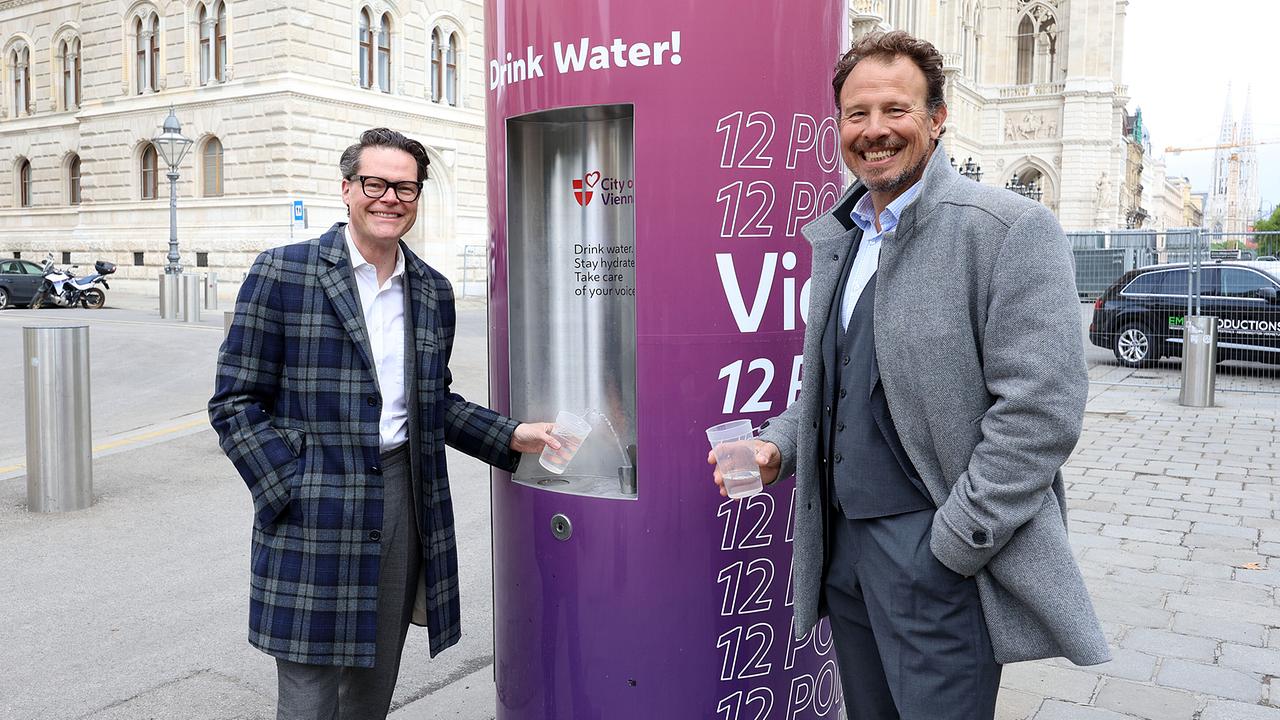
Activities in the field of sustainability and related issues, particularly with regard to the side events organised by the City of Vienna, are being supported by environmental health expert Hans-Peter Hutter and transparently documented in a sustainability report. “Major events such as the Eurovision Song Contest bear a particular responsibility: they are not only cultural highlights, but also examples of best practice for forward-looking action. Every reduction in emissions, every conscious use of resources sends a signal – ‘how it can be done’. An ESC that is consistently and genuinely sustainable is therefore far more than mere symbolism: it is a necessary contribution to ensuring that we not only talk about climate protection, but also act accordingly,” emphasises Hutter.
Sustainability as a learning process
Major events such as the Eurovision Song Contest continue to grow in importance and reach across Europe. At the same time, achieving genuine sustainability in this context presents particular challenges – especially as a significant proportion of emissions stems from the travel to and from the event by visitors, delegations and production teams, and can only be directly controlled to a limited extent. Against this backdrop, the focus is not solely on individual measures, but on the continuous improvement of processes and on systematically learning from existing projects and experiences. A key priority is therefore to speak openly not only about successes but also about existing challenges, in order to derive concrete recommendations for future events and to make a transparent contribution to the further development of sustainable event formats.
(April 30, 2026)