
Grand Stage Opening: Federal President Van der Bellen Opens the Stage for the Eurovision Song Contest 2026

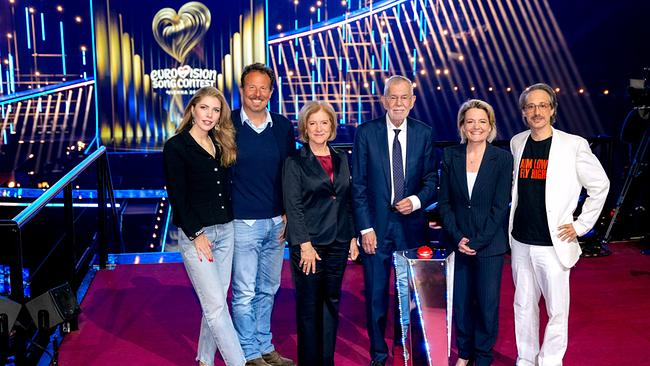
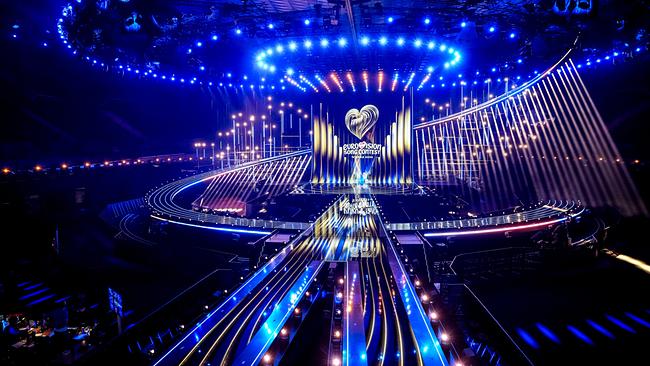
With a symbolic press on the start buzzer, Federal President Alexander Van der Bellen opened the stage for the Eurovision Song Contest 2026 shortly after 10:00 a.m. today at Wiener Stadthalle. After a time‑lapse video showing the two‑week construction process, a spectacular light show demonstrated the technical possibilities of the new ESC stage and the creative opportunities it offers the artists for staging their performances.
The event was hosted by Ö3 presenter Tina Ritschl. Federal President Van der Bellen described the world’s biggest entertainment show as a celebration of diversity: “The Song Contest shows how colorful our continent is. It shows what we can do and who we are, and that is a lot. As different as we may be, through the Song Contest we come together, even when we come from the most contrasting directions, like crossing a bridge.” Alongside the head of state at the Stage Opening were ORF Director General Ingrid Thurnher, ORF Program Director Stefanie Groiss‑Horowitz, ESC Executive Producer Michael Krön, the ESC hosts Victoria Swarovski and Michael Ostrowski, as well as four members of the ESC team who contributed to the project’s realization.
ORF Director General Ingrid Thurnher: “What we were able to experience today as a sneak preview with this spectacular light show will delight millions of viewers around the world in just a few weeks. It is phenomenal what countless interlocking hands and trades are accomplishing and setting up here. Not only for the 35 acts will this be an extraordinary staging – it is also a production for the ORF that is unparalleled. The Eurovision Song Contest in Vienna will be an event for everyone and a show that makes hearts beat faster.”
ORF Program Director Stefanie Groiss‑Horowitz: “It has been an exciting journey from the idea to the concept all the way to the finished stage. I am more than thrilled with the result and wholeheartedly congratulate stage designer Florian Wieder and lighting designer Tim Routledge. This stage combines international cutting‑edge technology with phenomenal visual language and, at the same time, incorporates Austrian contemporary spirit through its inspiration from the Vienna Secession. It is a showcase for Austria and the ORF to the entire world.”
Michael Krön, Executive Producer of the Eurovision Song Contest 2026: “What we were able to see today at Wiener Stadthalle fills me with great pride. We have been working for months on the world’s largest TV entertainment event, and with the Stage Opening we were able to give a glimpse of just how breathtaking the nine shows in the Stadthalle will truly be. My thanks go not only to our team, which is accomplishing great things, but also to our valuable partner companies. And of course to every single person who contributes to making this a fantastic show.”
Pics for the ESC Media Update:
ESC 2026 - ORF Press Galleries
2,000‑square‑meter and 210‑ton stage structure
The construction of the approximately 2,000‑square‑meter and 210‑ton stage structure took just under two weeks – partly operating 24 hours a day with double shifts. At peak times, up to 300 people were simultaneously involved in assembling the stage and lighting system.
A total of more than 5,000 square meters of recyclable stage molton is being used, along with a suspended grid of 816 meters of steel pipes with a total weight of three tons. This year’s lighting installation offers a technical first for the Song Contest: the lighting rig is made up entirely of energy‑efficient LED and laser technology. A total of 2,135 lighting fixtures, more than 8,500 individually controllable LEDs and 80 high‑speed hoists for moving lights are being deployed. The visual side of the competition is also setting new standards: around 28 live cameras will be used in Hall D. For the first time, the entire camera setup is based on the “ARRI Alexa 35 Cinematic LIVE Cameras” system, designed to create a new cinematic look.
Florian Wieder and Tim Routledge are the creative masterminds behind the Song Contest stage
Two internationally renowned creative forces are responsible for the stage and lighting. The stage design comes from Florian Wieder, who already designed the Vienna ESC stage in 2015 and has been responsible for the ESC stage concept eight times in total. Wieder works worldwide with artists such as Robbie Williams, U2, and Ed Sheeran. The lighting design comes from Briton Tim Routledge, who has already worked on the Song Contest in Liverpool as well as for international stars like Beyoncé, Helene Fischer, and the Spice Girls.
Since Friday, the technical base rehearsals and rehearsals with stand‑in artists for the country acts have been taking place in Hall D of the Vienna Stadthalle, with up to 11 hours of rehearsal time per day.With today’s stage opening, the show rehearsals with the two hosts begin. From 2 May, the official stage rehearsals with the delegations will follow. The first of nine public shows will take place on Monday, 11 May, in the evening. Three shows will be broadcast on TV: the semifinals on 12 and 14 May at 9:00 p.m., and the Grand Final on Saturday, 16 May, also at 9:00 p.m.
Around 1,000 journalists and 35 delegations will be on site: the Media Centre and the Delegation Bubble in Vienna’s Wiener Stadthalle
They will form key areas for around 1,000 journalists and 35 delegations: the Media Centre and the Delegation Bubble at Wiener Stadthalle. With its excellently equipped halls, ORF not only enables optimal working conditions but also ensures well-being throughout the stay of everyone present.
“Eurovision is a happy place”: Optimal working conditions for journalists in the Media Centre
A central press conference area provides ideal conditions for media briefings and will be used daily for current press updates. It includes a podium for up to ten speakers as well as a camera riser with capacity for up to 15 cameras. A total of 268 seats are available for journalists, along with additional standing room. For individual production needs, four interview rooms, a streaming room, two radio booths, and a broadcaster room can be booked, ensuring a comprehensive infrastructure for professional media work. In addition, a welcome desk team is available to assist with any concerns. Throughout the Media Centre, designated backdrop areas are provided for spontaneous interviews. The technical equipment includes three large LED screens and seven information monitors that ensure continuous coverage and up-to-date information for media representatives. Journalists also have access to a lounge area and an “Unplugged” zone, designed in cooperation with the Austrian National Tourist Office, offering space for relaxation and informal exchange. The service offering is rounded off with a dedicated catering area for media, 160 lockers, and several refreshment stations with water, tea, and coffee.
A feel-good area for acts and delegations: The Delegation Bubble
The Delegation Bubble is a backstage area created specifically to meet the needs of artists and their delegations. The aim is to provide a safe, protected, and comfortable environment in which participants can prepare optimally for their performances. The concept of the “Delegation Bubble” is based on a clear two-part structure: The “Connected Area” includes spaces where selected media activities and interactions can take place. The “Disconnected Area,” on the other hand, is designed as a strictly private retreat and remains completely free of cameras and media presence. This separation ensures that both public and personal needs of the artists are taken into account in the best possible way. To create an environment that feels like a “temporary home” during the intense event weeks, the Delegation Bubble offers comprehensive infrastructure and numerous services. These include a central welcome desk, individually usable dressing rooms, a professionally equipped hair and make-up area, and a delegation lounge for rest and exchange. The offering is supplemented by a catering area, functional workspaces, and special retreat and relaxation areas. A dedicated room for vocal warm-ups is also available for artistic preparation. With this holistic concept, the Delegation Bubble sets new standards in the care and support of artists and delegations at the Eurovision Song Contest.
(April 28, 2026)