
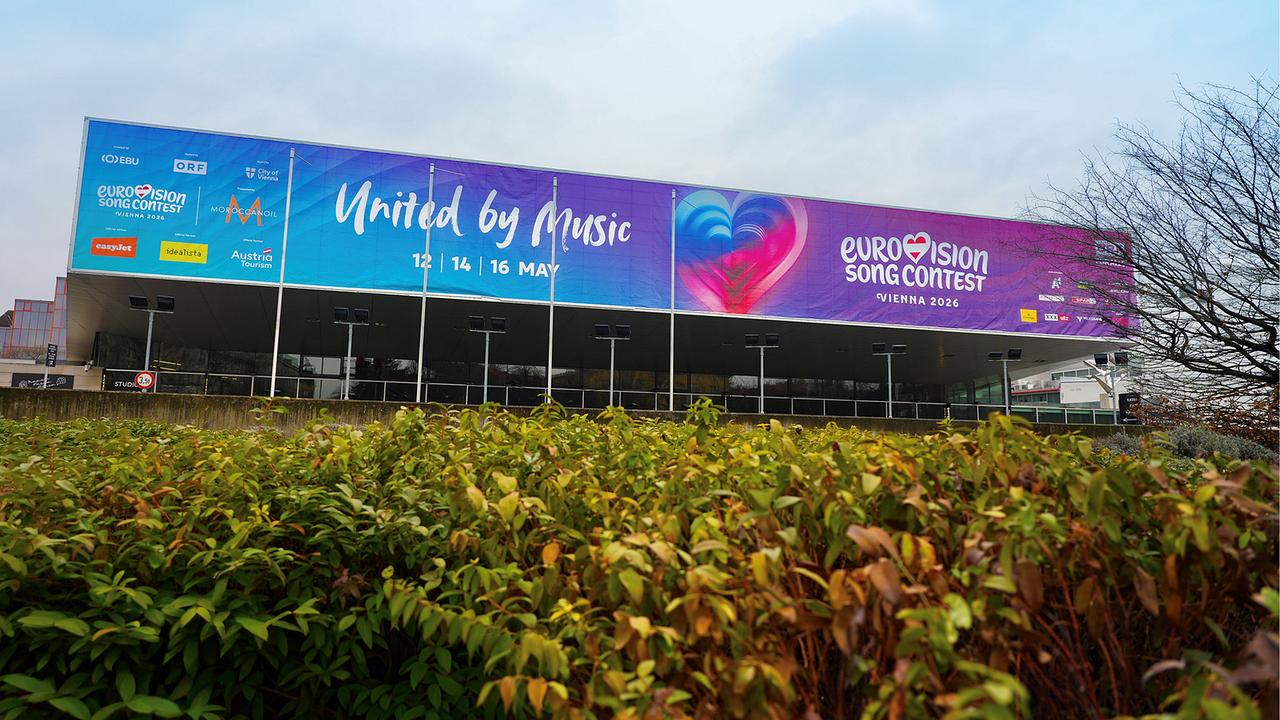
Security, Sustainability, Greenroom and more: ORF presents comprehensive update on the Eurovision Song Contest

ORF announced the latest developments regarding the Eurovision Song Contest 2026 in Vienna in a comprehensive media update on Thursday, February 26, 2026. The update covered ORF's security concept for the world's biggest TV entertainment event, sustainability measures, and first visual glimpses of the Greenroom — inspired by Viennese coffee house culture and an absolute novelty in the ESC universe. ORF also provided information on the next ticket wave, the new website songcontest.ORF.at, and ESC projects by ORF radio stations Ö3, Ö1, and FM4. The media update was hosted by Alexandra Maritza Wachter and was broadcast live on ORF III and ORF ON, where it remains available on demand.
ORF Director General Roland Weißmann: "The Eurovision Song Contest 2026 in Vienna is drawing ever closer, and together with our partners we are working intensively to create optimal conditions for this extraordinary event. Alongside a comprehensive security concept that will ensure smooth operations, we are also taking great care in shaping the atmosphere on site. I am very much looking forward to the shows in May — and to opening ticket sales again so that even more ESC enthusiasts can experience this special music festival live."
Safe Celebrations: ORF announces details of security concept for Eurovision Song Contest 2026 in Vienna
Security is the absolute top priority at the Eurovision Song Contest, and for many months an intensive effort has gone into developing a comprehensive security concept. To ensure the world's biggest music festival runs safely and peacefully, ORF is coordinating closely and continuously with the Vienna Police, the Ministry of the Interior, the City of Vienna, and all relevant authorities. All individuals involved in the event will undergo strict security checks in advance. Airport-level security standards apply throughout the Wiener Stadthalle. The police will also be present with specialized units, including the Police Dog Unit, and will carry out drone countermeasures.
Deputy President of the Vienna State Police, General Dieter Csefan: „The Vienna Police brings extensive experience with large-scale events. Special operational structures and coordination mechanisms will be established to ensure maximum security. A key element is close communication with the police authorities responsible at previous Eurovision host cities. We are responding to the elevated threat level with experience, expertise, and international networking. Together with ORF, the City of Vienna, and other partners, this event will be managed professionally and safely.“
Cybersecurity: The digital protection shield
To protect the digital infrastructure of the Eurovision Song Contest as effectively as possible, ORF has established a „Cybersecurity Coordination Group“ together with the Federal Ministry of the Interior (BMI) and the EBU to continuously evaluate and assess the threat landscape. ORF is also implementing awareness measures to sensitize the public, hotels, and suppliers.
Harald Kräuter, ORF Director of Technology and Digitalization: "Security-relevant activities surrounding ESC 2026 have been closely monitored for months. We continuously analyze the experiences of other major international events in order to systematically integrate them into our planning for Vienna. Our situational assessments allow us to detect threats in real time — and to take protective measures in a timely manner."
Dual environmental certification
Sustainability is a key concern for ORF, though it is equally clear that an event of this scale inevitably leaves an ecological footprint. ORF has set itself the goal of minimizing the CO₂ footprint as much as possible. To demonstrate this commitment, a dual certification with the environmental labels „Green Event“ and „Green Producing“ is being pursued.
Michael Krön, Executive Producer of the Eurovision Song Contest: "ORF and Vienna showed in 2015 that we can set new benchmarks in sustainability, and this year we want to go one step further with a dual environmental certification. We are implementing a wide range of measures — from eco-friendly travel options and regional, seasonal catering to the use of efficient LEDs in the show and waste reduction. ORF has a clear goal: the Eurovision Song Contest 2026 should become a learning and reference project for large-scale events worldwide."
Greenroom: Eurovision Song Contest meets viennese coffee house culture
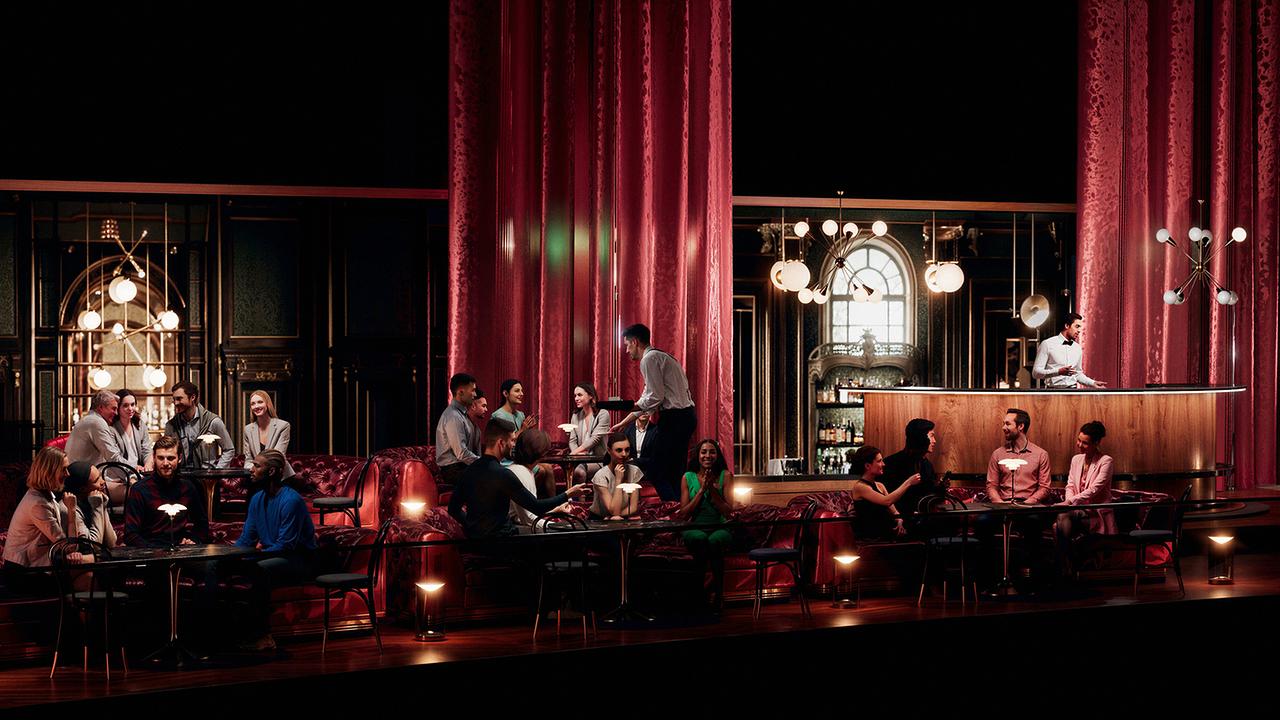
A particularly important element of the stage design is the lounge area where artists and delegations are seated during the live shows: the so-called Greenroom, which will take on a very special character for the 70th edition of the Eurovision Song Contest in Vienna. Styled as a traditional Viennese coffee house, the Greenroom will radiate a distinctive charm and serve as a stage to make Austria as the host country visible and tangible. No other area of the show is better suited for this: it is where artists come together, encounters take place, emotions unfold, and authentic moments are created.
ORF program director Stefanie Groiss-Horowitz: „With the Greenroom as a modern interpretation of the Viennese coffee house, we have woven a piece of Austrian identity into the setting of the Eurovision Song Contest, thereby connecting our country's culture with the emotional diversity of the Song Contest. At the same time, ORF is also sending a beautiful piece of Viennese local color to the whole world.“
Second ticket wave and new ORF website
The first sales wave launched on January 13 — all available tickets sold out in record time: the Final in 14 minutes, both Semi-Finals within 20 minutes. A second ticket wave will now follow: on March 26 at 3:00 PM, tickets that were not claimed from the allocations reserved for national and international partners, participating delegations, and the EBU will go on sale, along with additional ticket capacities made available for production-related reasons.
The new website songcontest.ORF.at features exciting stories about the world's biggest TV entertainment event, exclusive interviews, photos and videos, live blogs during the shows, and a social wall with posts from across the ESC universe.
ESC projects by ORF Radio stations Ö3, Ö1, and FM4
ORF's radio stations are dedicating special programming formats to ESC. Ö3 is inviting clubs and associations across Austria to submit ESC cover songs with the „Ö3 Cover Song Contest,“ aiming to ignite Eurovision enthusiasm throughout the country. All of Austria will be able to vote for the winning association in April. The winning association will perform live in the Eurovision Village at Rathausplatz and win 20 tickets for the first Song Contest show in Vienna. Ö1 is launching an open music competition under the motto „Ö1 goes Song Contest“ for anyone aged 14 and over. 25 finalists will be presented on air in May and then put to a public vote. FM4 is presenting the new video podcast „Bussi Bla Bla“ with Conchita Wurst and JJ. 20 episodes are planned for the first season, airing every Sunday at 8:00 PM since February 22.
Safe celebrations — How ORF is protecting the Eurovision Song Contest
The Eurovision Song Contest is a major international event with global media attention. Security is the highest priority. ORF is doing everything in its power to ensure this world's biggest music festival is a safe, peaceful event.
Close coordination with security authorities and intelligence services
In close coordination with the Vienna Police, the Ministry of the Interior, the City of Vienna, and all relevant authorities, a comprehensive security concept is currently being developed. It covers all phases of the mega-event — from the ESC team's takeover of the Wiener Stadthalle to the dispersal of visitors after the Final. The concept is based on a risk analysis, emergency procedures, and a clear operational and crisis structure. It also incorporates police experience from large-scale events and state visits.
The Vienna Police is in close contact with national and international security authorities and intelligence services. Ongoing situational analyses enable the early identification of possible risks and vulnerabilities. Measures and the security concept are continuously and flexibly adapted.
Police presence and specialized units
In advance of the Eurovision Song Contest, police will conduct security checks on all individuals involved in the event. In addition, searches by the Police Dog Unit will take place, along with drone countermeasures carried out by the Special Units Directorate / EKO Cobra (DSE/EKO Cobra).
During ESC week, uniformed and plainclothes officers will ensure security at the venues and around ESC locations. Special forces from the Federal Ministry of the Interior (BMI), the Federal Criminal Police Office, and the Vienna State Police Directorate will be deployed.
Airport-Level security at the Stadthalle
For the entire duration of the Eurovision Song Contest, airport-level security will be in place at the Wiener Stadthalle. Everything entering the building — from tonnes of production equipment to visitors' mobile phones — will be scanned and examined by sniffer dogs. Metal detectors and X-ray lanes are installed at all staff entrances. In addition, 180 new surveillance cameras will monitor the area, and approximately 500 security personnel will be on duty in the Stadthalle alone each day.
Audiences must also be prepared for extensive entry checks with metal detectors and potential waiting times, as thorough checks will be conducted by security personnel. Visitors should therefore — much like at an airport — allow extra time for entry.
Strict no-bag policy
One of the security measures that distinguishes the Eurovision Song Contest 2026 from other large-scale events is a consistent no-bag policy: bags, backpacks, bum bags, and handbags are prohibited without exception. Only small personal items such as a wallet, mobile phone, and keys are permitted, along with transparent containers no larger than A6 format.
No entry without ID
All tickets are personalized and available exclusively in electronic form on mobile devices. Screenshots of tickets are not sufficient. The QR code will appear on the mobile phone approximately 48 hours before the show — also a security measure. At the entrance, a strict identity check with photo ID will take place. Visitors without a valid ID will not be admitted.
Strict screening of staff
Not only the audience, but all individuals involved in the Eurovision Song Contest will undergo police security checks — from security staff and volunteers to catering personnel. These checks go well beyond the minimum legal requirements.
All staff will also go through a three-stage training procedure: covering general security information, position-specific written briefings, and on-site in-person briefings. This ensures that in an emergency, everyone knows immediately what to do. A comprehensive health and occupational safety concept also protects all staff during construction and production.
The digital protection shield: Our expert network for cybersecurity
Cybersecurity is a central component of the comprehensive security concept for the Eurovision Song Contest 2026. To protect the digital infrastructure of the world's biggest music competition as effectively as possible, ORF has established a Cybersecurity Coordination Group together with the Federal Ministry of the Interior (BMI) and the EBU.
Represented within it are the specialist departments of Austria's top security authorities — the Directorate of State Security and Intelligence (DSN), the Cyber Situation Center of the NIS Authority, GovCERT, the Cybercrime Competence Center C4, the Federal Criminal Police Office, the Vienna State Police Directorate, and the City of Vienna with WienCERT. The Cybersecurity Coordination Group also works closely with international experts, authorities, and international CERT bodies abroad.
Security-relevant activities surrounding the Eurovision Song Contest 2026 have been closely monitored for months, also in an international context. Information is exchanged continuously and in real time — so that in an emergency, action can be taken without delay. Continuously produced cybersecurity situational assessments make it possible to detect threats early, evaluate their risk potential, and initiate protective measures.
Multi-level security concept
The cybersecurity strategy encompasses several layers: from securing the technical infrastructure of the Wiener Stadthalle and risk analysis of the entire supply chain, to raising awareness among all involved parties — from hotels and venues to partner companies. Critical partners — in areas such as software, network technology, or broadcast hardware — must additionally meet the EBU's strict technical requirements, the compliance with which is verified through independent audits.
The overarching goal of the cybersecurity measures is to reduce as many attack vectors as possible and to ensure a structured response capability with practiced procedures. The aim is to gather intelligence on potential attackers and their tactics in order to build appropriate protection and create resilience.
While the Stadthalle's infrastructure and core technical systems are heavily secured, attackers often target the human factor. As the organizer of the Eurovision Song Contest, ORF sees it as its responsibility to also alert hotels housing delegations and artists to potential cyber threats — ranging from protecting hotel booking systems and Wi-Fi security to raising awareness among hotel staff.
Raising awareness
Before the start of ticket sales, ORF, the EBU, BMI, the City of Vienna, and the internet platform „Watchlist Internet“ launched a broad information campaign on cybersecurity. This drew attention to the fact that tickets are available exclusively through the official channel at www.oeticket.com.
From early March, tickets will also be given away in competitions — but exclusively via authorized national partners. Whether a competition is legitimate can easily be verified at songcontest.ORF.at.
Central contact points for tips and assistance
Reports from the public are a decisive factor, as not every situation can be detected immediately. Anyone reporting suspicious offers or activities helps to uncover fraud attempts and limit damage. A joint network of contact points has been established:
- Suspicious emails or websites related to ESC ticket sales should be sent immediately to ORF's central address: esc-cybersecurity@orf.at
- To report a criminal offense, any police station can be contacted, or the Federal Criminal Police Office's online reporting center for cybercrime: against-cybercrime@bmi.gv.at
- For concrete support and advice, the City of Vienna's Cybercrime Helpline is available at: 01 4000-4006 / www.wien.gv.at/kontakt/cybercrime-helpline
- Current warnings about online scams are continuously listed on the Watchlist Internet platform: www.watchlist-internet.at
„Green Event“ and „Green Producing“ — Sustainability as a key priority for ORF
As Europe's biggest TV event, the Eurovision Song Contest carries a particular signal value: ORF, as a public broadcaster, aims to demonstrate that entertainment, international collaboration, and ecological responsibility can go hand in hand. That is why ORF is pursuing not one but two Austrian Ecolabels this time: „Green Event“ and „Green Producing.“ Already in 2015, the Eurovision Song Contest in Vienna set benchmarks and became the first competition of this scale in Europe to receive the Austrian Ecolabel „Green Event.“ Compliance with the ecolabel criteria is assessed by independent auditors appointed by the Federal Ministry for Agriculture, Regions and Tourism.
ORF is also fully aware, however, that an event of this scale inevitably leaves an ecological footprint. That is why it has set itself the goal of minimizing the CO₂ footprint as much as possible. This involves a wide range of measures — from eco-friendly travel options and the use of efficient LEDs to waste reduction.
Green producing
The „Green Producing“ ecolabel carries its own strict production requirements. For the first time at the Eurovision Song Contest, a fully LED- and laser-based lighting concept will be used — eliminating conventional light sources entirely. This significantly reduces energy consumption, waste heat, and material use, and sets new production standards for large-scale events in this category. The Wiener Stadthalle also sources electricity from 100% renewable energy, part of which comes from its own photovoltaic system. Careful attention is also paid to efficient logistics planning to eliminate unnecessary transport journeys.
Raising awareness for üublic transport
Together with ÖBB, ORF is actively promoting rail travel as the primary way to reach the Eurovision Song Contest 2026, using a specially designed ESC-themed locomotive to boost visibility and awareness. Based on current ticket sales and the experience of past events, the majority of visitors are expected to travel from within Austria, followed by Germany as the second most important market. Both markets have a dense rail network and numerous direct connections to Vienna. For ESC ticket holders arriving by plane, a 25% discount on the City Airport Train (CAT) is available.
Rail travel therefore offers many guests a practical and more climate-friendly alternative to traveling by car or plane. Through targeted information, partnerships, and travel incentives, the aim is to further increase the use of public transport — and to encourage as many visitors as possible to choose a lower-emission travel option, making a significant contribution to reducing overall emissions.
Catering and waste avoidance
When tendering for all partners and suppliers, care was taken to ensure compliance with the ecolabel requirements. Catering is handled by an ecolabel-certified company with extensive green event experience. The catering focus is on regional, seasonal produce and short transport routes, combined with a high proportion of organic products.
Only reusable cups will be used in the Wiener Stadthalle. A large portion of these comes from ARA Altstoff Recycling Austria, which produces the cups from fully recycled material. The cups are available in three ESC designs and are, in experience, popular souvenirs. Any uncollected cups will go to charitable causes. The remainder of the reusable cups required is provided by the City of Vienna.
To minimize waste, the distribution of flyers, promotional items, and free newspapers will be dispensed with entirely. All invitations, press materials, and posters will be replaced with digital solutions or printed in the smallest possible quantities only.
ORF has a clear goal: the Eurovision Song Contest 2026 should become a learning and reference project for large-scale events worldwide. All measures, processes, and results will be systematically documented and made available to future host broadcasters.
„A Melange, please“ — The Greenroom at the 70th Eurovision Song Contest with its Viennese Coffee House charm
A particularly important element of the stage design is the lounge area where artists and delegations are seated during the live shows: the so-called Greenroom, which will take on a very special character for the 70th edition of the Eurovision Song Contest in Vienna. Styled as a traditional Viennese coffee house, the Greenroom will radiate a distinctive charm and serve as a stage to make Austria as the host country visible and tangible. No other area of the show is better suited for this: it is where the artists come together, encounters take place, emotions unfold, and authentic moments are born.
Eurovision Song Contest meets Viennese Coffee House Culture
The design concept by Florian Wieder for the Eurovision Song Contest 2026 Greenroom is inspired by Viennese coffee house culture. Officially recognized as intangible UNESCO cultural heritage, this culture stands for far more than the mere enjoyment of coffee — it embodies a distinctive philosophy of life and a deeply rooted social tradition.
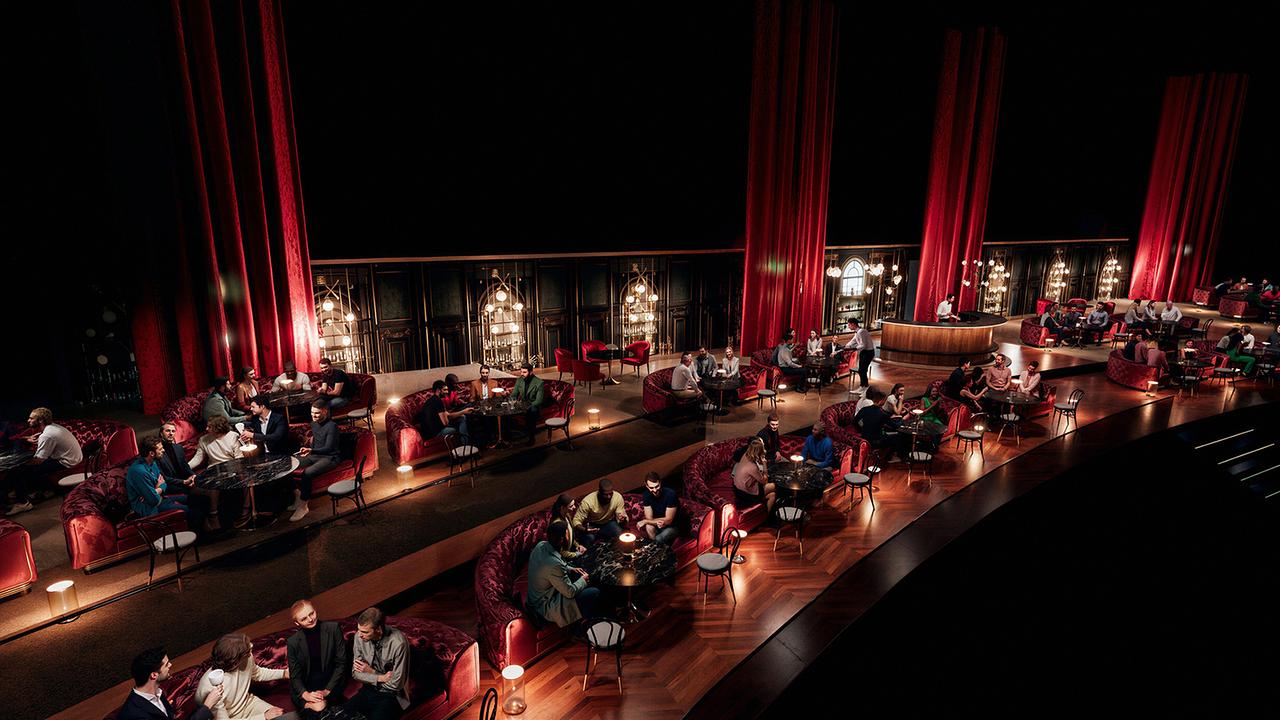
Historically, the Viennese coffee house was a meeting place for all of society. It was — and still is today — a place of exchange, openness, and democratic encounter: a space where different perspectives coexist as a matter of course. It is precisely this welcoming cultural philosophy that is now to be brought into the Eurovision Song Contest through the Greenroom at the shows in the Wiener Stadthalle. The Greenroom will become a Viennese coffee house — and thus a place of encounter, emotion, and shared experience at the heart of Europe.
Second Ticket Wave and new ESC Website
The first sales wave launched on January 13 — particularly for the evening shows, all available tickets were sold out in record time: the Final in 14 minutes, both Semi-Finals within 20 minutes.
In the second wave, on March 26 at 3:00 PM, tickets that were not claimed from the allocations reserved for national and international partners, participating delegations, and the EBU will go on sale, along with additional ticket capacities made available for production-related reasons. In total, there will be several thousand tickets across all nine shows.
Importantly, tickets can only be purchased if you registered and verified your account during the registration phase (November to December 2025) at www.eurovision.com and www.oeticket.com. Subsequent registration — and therefore ticket purchases — are no longer possible. The purpose of this registration is to ensure fair ticket access and prevent bot purchases or commercial resale.
ORF's multimedia online package: The new eurovision song contest website Is live
Who will Europe send to Vienna? How are fans from around the world anticipating the competition? What is happening during rehearsals at the Wiener Stadthalle? And what does the City of Vienna have to offer around the Eurovision Song Contest? Answers to these and many other questions can now be found on the new public-facing website songcontest.ORF.at, which serves as ORF's central digital ESC hub.
A glimpse behind the scenes
Featuring exciting stories about the world's biggest TV entertainment event, exclusive interviews, photos and videos, live blogs during the shows, and a social wall with posts from across the ESC universe, the platform offers a comprehensive look at everything happening. The new website provides behind-the-scenes insights and covers topics that matter to fans.
The Eurovision Song Contest on ORF ON
ORF ON brings the Eurovision Song Contest to where the fans are: live, up close, and available at any time. All performances are available as live streams and real-time catch-up, along with exclusive videos in a dedicated ON collection.
The Eurovision Song Contest on ORF TELETEXT — Follow along and join the discussion
This year too, fans can follow their comments on the TV screen via ORF TELETEXT during the live shows, thanks to the special „TXT meets ESC“ service for the Eurovision Song Contest. How does it work? Simply post on debatte.ORF.at and join the discussion. The most creative contributions will be broadcast on air. In addition, ORF TELETEXT continuously provides news about artists and shows — available under „ESC 2026“ (page 450) and „Culture and Entertainment“ (pages 107, 110, and from page 190).
The „Ö3 Cover Song Contest“: How associations can sing their way to ESC

Ö3 is launching the „Ö3 Cover Song Contest,“ searching for the most creative club and association cover songs — and bringing the winning association to the Eurovision Song Contest 2026 in Vienna! The winners will perform live in the Eurovision Village at Rathausplatz in Vienna and win 20 tickets for the very first Song Contest show in 2026 (Evening Preview Show). From brass orchestras in Bregenz to dance clubs in Burgenland — associations across Austria are invited: create a cover song, film your performance, and upload it to the Ö3 website. With the „Ö3 Cover Song Contest,“ Ö3 gives associations a stage for creativity and team spirit, and brings the whole country together during ESC season.
Ö3 Cover Song Contest: submit performance videos now
All associations — whether football clubs, brass bands, scout groups, or choirs — are invited to film performances of their self-created cover songs and submit them via the Ö3 website. An Ö3 jury of music and Eurovision Song Contest experts, along with Cesár Sampson, will select the nine best performances — one association per federal state. Then the Ö3 community takes over and decides via a vote on the Ö3 website which association wins the „Ö3 Cover Song Contest.“
The winning association will perform live in the Eurovision Village at Rathausplatz and win 20 tickets for the first Song Contest show in 2026 (Evening Preview Show). Videos can be submitted until Sunday, April 12 (11:59 PM). The voting phase on the Ö3 website begins Monday, April 20.
Video upload and all details at: oe3.ORF.at
Ö1 Launches Music Competition for Creative Minds Under the Motto „Ö1 goes Song Contest“
On the occasion of the Eurovision Song Contest 2026, Ö1 is launching the project „Ö1 goes Song Contest,“ inviting music enthusiasts aged 14 and over to submit their own acoustic contributions. Original sound ideas with a duration of 40 to 50 seconds are sought. There are no stylistic restrictions on content — entries can take the form of a cappella performances, singer-songwriting, composed music, electronic sound experiments, or sounds of all kinds.
25 entries reach the rinal
The online submission phase runs from March 1 to April 7, 2026. A jury consisting of Cesár Sampson, Ralph Mothwurf, Isabella Forciniti, and Ö1 Music Director Elke Tschaikner will select the most compelling entries. One additional finalist will receive a wildcard. A total of 25 entries will reach the final. These will be presented on Ö1's program during ESC week from May 11 to 15 and then put to a public vote.
The online vote will take place from April 21 to May 4. The three entries with the most votes will each be awarded €1,500.
„Ö1 goes Song Contest“ is conceived as an open stage for musical diversity, a spirit of experimentation, and individual expression. The aim is to make music tangible as a connecting medium — regardless of genre, background, or musical training. Through the presentation of the finalists on Ö1's program and the subsequent vote, a dialogic process between artists and audience is created, fostering exchange and participation and enabling shared musical experience in the context of the Eurovision Song Contest 2026.
Entries can be submitted until April 7, 2026 at oe1.ORF.at/esc.
FM4 Launches Podcast „Bussi Bla Bla“ with Conchita Wurst and JJ
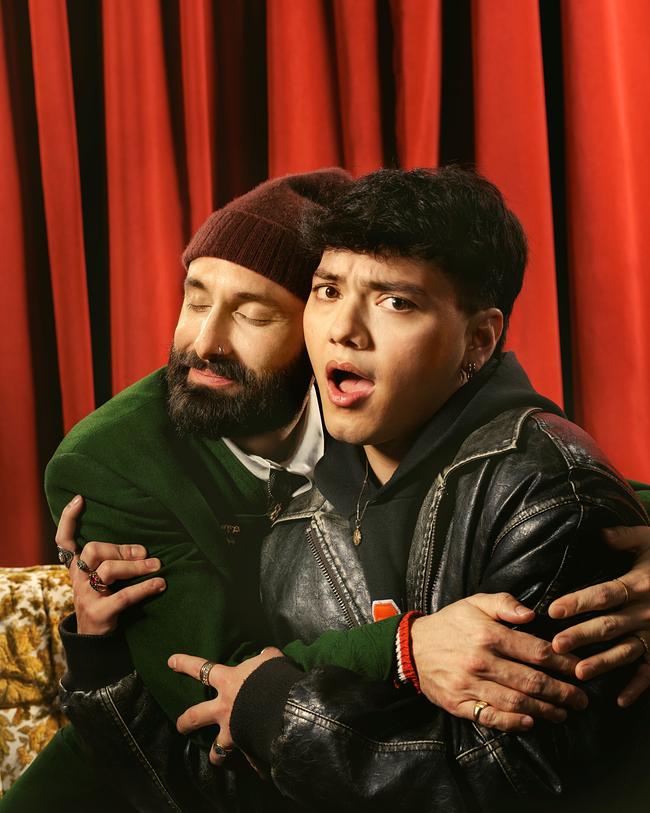
Conchita Wurst and JJ are joining forces for FM4: the two Eurovision Song Contest winners come together to talk about pop culture, queerness, fan messages, and current internet phenomena. 20 episodes of the video podcast are planned for the first season, airing every Sunday at 8:00 PM since February 22. For fans of video content, „Bussi Bla Bla“ is available on YouTube 24 hours earlier.
What Conchita Wurst and JJ have in common: both have an ESC victory under their belts, have already shared a stage, and will now sit together weekly to chat about everything on their minds. "We talk about everything you'd talk about with your best friends — except there's a camera running,„ the two ESC icons explain. Also known as Tom Neuwirth and Johannes Pietsch, they note that each of the 20 episodes will have a thematic thread while also leaving room for “spontaneous tangents„ and “wild associations.„ Listeners can look forward to pop culture, queerness, and fashion, as well as segments such as “Slid into the DMs,„ where fan messages are discussed, and “Explaining Trends to Conchita," in which JJ explains internet phenomena to Conchita.
(February 26, 2026)